

About Etalia
Science-driven organizations have inherited two traditions that were never built for what communication can actually do.
From corporate practice, communication is treated as something that arrives after strategy is set and decisions are made—an instrument for promoting what already exists.
From science communication, it is often treated as dissemination: findings are produced first, then explained afterward.
Both models treat communication as a delivery mechanism.
But communication is more than delivery. Fundamentally, it is how humans forge the connections that open doors, build the relationships that matter, and create the conditions that make ambition achievable.
When scientific organizations learn to harness communication that way, it becomes one of the most powerful forces available to them.
That is the premise Etalia was founded on—and the reason we developed the practice of Science Relations.
Science Relations treats communication not as a function, but as a leadership capability: the disciplined practice of cultivating the relationships that allow scientific insight to move—through institutions, across disciplines, and into the decisions that shape the world.

Meet the Etalia Team
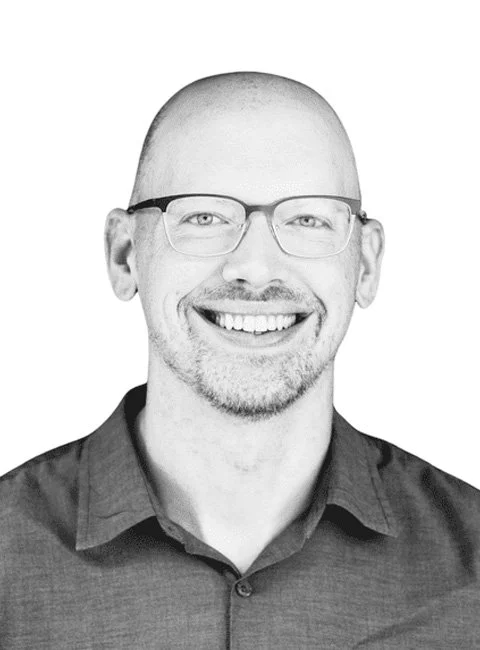
Paul Martin Jensen
Co-founder and CEO
Paul came to science the hard way. He grew up inside a global End Times movement — a total worldview, not merely a religion — in which the Earth was 6,000 years old, evolution was a lie, and a culture of both conspiracy and authority enforced absolute certainty about how the world would soon end.
Exposure to science gave him the tools to find his way out.
Navigating that path left him with something most strategists don't carry: a firsthand understanding of what it means to encounter evidence-based thinking across a genuine epistemological divide, and a deep sense of what's actually at stake when scientists fail to reach the people who need to hear them most.
There was an irony he couldn't shake: the movement he grew up in had invested heavily in communication for over a century — pioneering direct mail, radio, television, and digital outreach with a sense of urgency that left no audience unreached. Scientific organizations, producing knowledge that could actually change the world, had inherited no such instinct.
Paul spent the next two decades inside global health — one of the few fields where science, policy, institutional power, and human urgency meet in the same room — and came to understand why. Communication gets centralized and separated from vision. Visibility, when it comes, rarely gets harnessed. The attention dissipates before it can become anything.
As Deputy Director of ACTION, a Gates Foundation-backed international advocacy network operating across ten countries, Paul helped build one of global health's most effective campaigns for mobilizing resources and political will around tuberculosis. He later served on the executive leadership team of the International Union Against Tuberculosis and Lung Disease, where as Director of Policy and Strategy he oversaw strategy, messaging, policy advocacy, and scientific dissemination across roughly 100 countries.
Throughout that work, he was also doing something else: helping the field's most senior leaders find the ideas inside their expertise that were worth saying in public, and placing those ideas where they would reach the people whose attention mattered most. He worked with heads of state, Nobel laureates, the Director-General of the World Health Organization, pharmaceutical CEOs, and researchers from Columbia, Dartmouth, Duke, Harvard, and NYU. The work appeared in the Wall Street Journal, Washington Post, STAT, Project Syndicate, and dozens of other leading outlets. It contributed to the mobilization of more than $1 billion for global health. Across his client engagements, every Op-Ed he has been hired to develop and place for a thought-leadership client has been selected for publication.
What emerged from all of it was Science Relations — not a communications function, but a leadership practice: one that helps organizations with genuine expertise use their deepest insights to lead, shape their field, and build the relationships that make their vision achievable.
Paul is now building Etalia's next chapter: a technology platform that will enable research organizations to apply the Science Relations framework at scale.
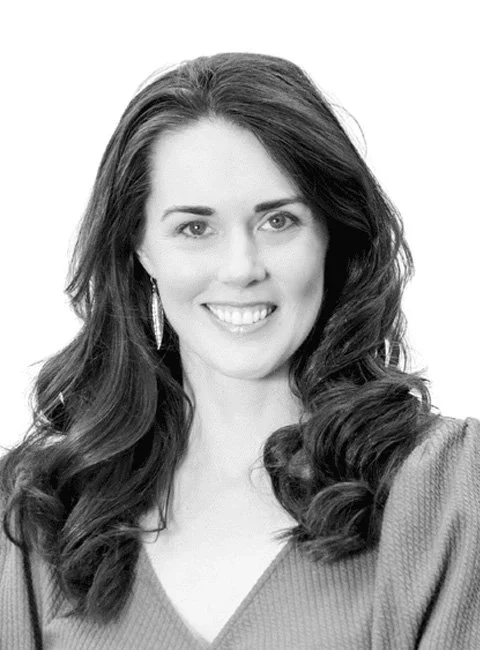
Carolyn Barnwell
Co-founder and Chief Growth Officer
Where Paul works from the outside in — starting with the strategic landscape and building toward the insight that belongs in public — Carolyn works from the inside out.
Her premise is simple: what most leaders experience as pressure is often a quiet disconnection from their own voice and purpose. Most of what blocks a leader from showing up with full clarity, conviction, and presence isn’t a skill gap. It’s an obstruction — the accumulated weight of high-stakes work, the habits of caution that serious professional training instills, the widening gap between what a leader knows and what they’re able to say out loud when it matters most.
Carolyn’s work is to remove what’s in the way — because Science Relations begins not with an audience, but with the leader’s own internal clarity about who they are, what they believe, and what they are here to say.
The leaders she works with describe what happens as stepping onto solid ground. A distinct shift in which doubt and distraction recede, words come more easily and sincerely, and the internal groundedness that lets them hold a room rather than perform for it.
Carolyn works at the intersection of stress physiology and leadership development. Her methods are physiological rather than motivational — rooted in how the body actually carries and releases stress, and how to train the nervous system to respond differently when the stakes are high. The result is leaders who don't just communicate more effectively. They lead from a deeper and more authentic place.
She came to this work through a different door. Twelve years as a producer with National Geographic put her inside the working lives of scientists at the frontier of their fields — people with extraordinary things to say and very little practice saying them to anyone outside their discipline. That experience gave her a precise understanding of both the intellectual depth that serious researchers bring to their work and the internal experience of being asked to make that work compelling to the world. She knows what it takes. She knows how to help.
She also brings to that work a quality that's rarely named but always necessary: discretion. Years of guiding high-touch confidential work with leaders and founders has sharpened her ability to hold complexity, navigate competing interests, and operate with the tact that deep leadership work requires.
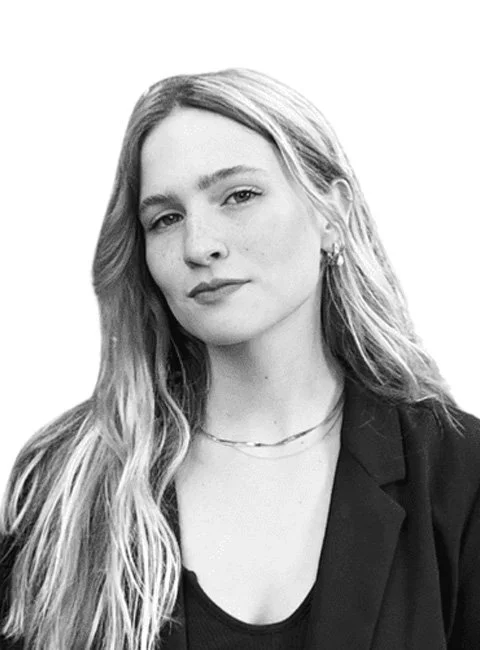
Mila Phelps Friedl
Educational Writer and Media Strategist
Mila Phelps Friedl is an educational content writer, ghostwriter, and media strategist. With a diverse background in content creation and digital communications, she has effectively managed social media strategies, led content development, and enhanced brand visibility and voice for organizations in the technology, arts, and health science sectors.
Mila holds a B.A. in Journalism from Ithaca College and has authored and collaborated on published articles for various print and online publications. Her work is characterized by a commitment to impactful storytelling, accessibility, and education. In her free time, Mila volunteers with arts initiatives, and continues to pursue her own narrative writing, some of which has been published in the NY Times.
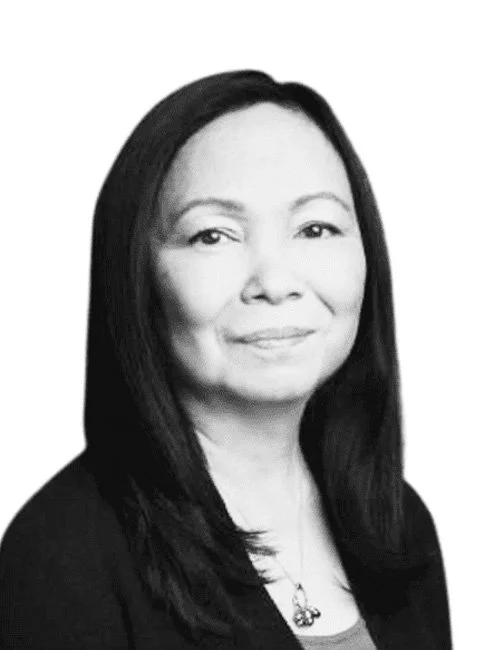
Dr. Paula Fujiwara
Scientific Advisor
Paula I. Fujiwara, MD, MPH, has been a leader in public health research and clinical management for over 30 years. Working as an independent consultant with organizations like USAID, the Stop TB Partnership, and the World Organisation for Animal Health Fujiwara has brought a wealth of experience to her work in public health. She currently serves as a Scientific Advisor for the Asia Pacific Cities Alliance for Health and Development and Antidote.ngo, leveraging her expertise to address critical public health challenges.
For 20 years, she provided strategic visioning and technical knowledge across both operational and clinical research in TB at The International Union Against Tuberculosis and Lung Disease (The Union), in Paris, France. As Scientific Director (2013-2021), she was responsible for overseeing all technical departments and projects in Africa, Asia, and Latin America. Dr. Fujiwara was seconded by the U.S. Centers for Disease Control and Prevention to New York City's Bureau of TB Control from 1992-2000, during which time, as an Assistant Commissioner of Health, she led efforts to reduce cases of TB by more than two-thirds and almost completely eliminated multidrug-resistant TB. She has served with the World Health Organization, the Global Fund to End AIDS, Tuberculosis, and Malaria, and was on the Stop TB Partnership Board of Directors Executive Committee, where she was the chairperson of the Task Force charged with writing the “Global Plan to End TB 2016-2020: the Paradigm Shift”, as well as revisions for 2018-2022, and the most current edition for 2023-2030.
She completed her medical training at the University of California (UC) Davis and UC San Francisco and also holds Master of Public Health and Master of Science degrees from UC Berkeley. She has published widely on the public health aspects of TB and HIV, prevention of tobacco smoking in low-and middle-income countries, and rabies. Her ongoing work centers on One Health and the prevention of psychological manipulation using a public health approach.
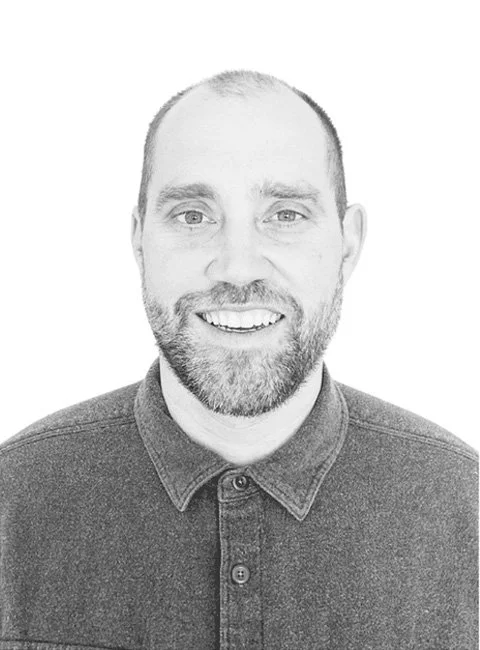
Paul Barnwell
Writer and Editor
Paul Barnwell is a freelance writer and editor. Paul has written for publication for over fifteen years, penning a wide variety of communications including op-eds, blog posts, white papers, case studies, newsletters, personal essays, articles, and more. His work has appeared in The Atlantic, The Washington Post, Education Week, Common Sense Education, Chronicle for Higher Education, Harvard Ed., and others.
Paul taught in public schools in Kentucky and New Hampshire from 2004-2022. During that time, he often reflected and wrote about trends inside and outside of the classroom. He pioneered online and hybrid teacher professional development and created interdisciplinary courses, including the first digital storytelling course in his district.
Paul holds a B.A. in American Literature from Middlebury College and an M.A. in English Literature from the Middlebury Breadloaf School of English.
He lives with his wife Rebecca in New Hampshire, where he enjoys land stewardship and hobby farm projects both large and small.
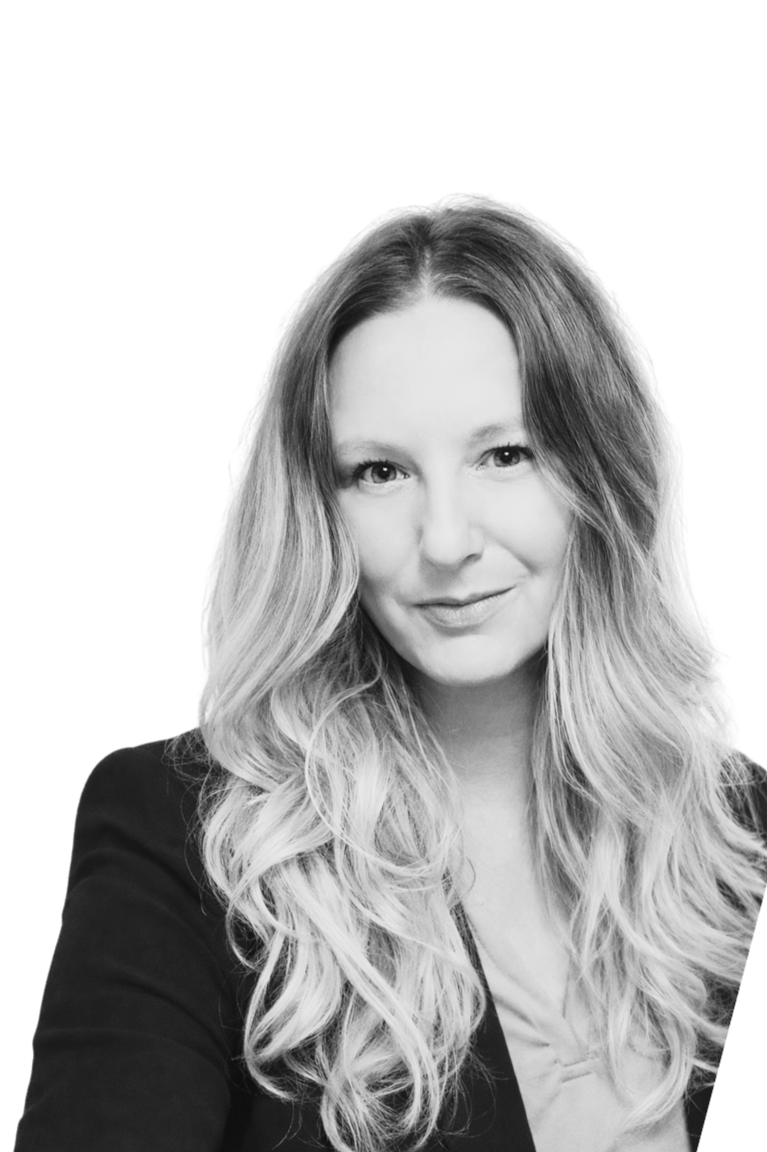
Melinda Kretschmer
Executive Assistant
Melinda Kretschmer combines over a decade of expertise in administrative management, customer support, and project coordination to enhance operational efficiency and deliver exceptional client experiences. With a diverse professional background spanning education and technology, Melinda has held previous roles as a Customer Support Specialist and Implementation Strategist at Element451, where she honed her skills in client relations and training. She also brings over 18 years of experience in higher education, including teaching undergraduate courses, academic advising and program development. Melinda holds a Master of Education in Curriculum and Instruction with a secondary focus on Instructional Technology from the University of South Florida and a Bachelor of Science in Technical Management from DeVry University. Melinda enjoys the beach and planning trips.