


Science Relations
Strategic communications solutions purpose-built
for leaders in health and science.
Turn your knowledge into strategic opportunity.
It starts with your purpose, and ends with your vision of success: funding mobilized, partnerships signed, policy changed. In between, we position your leaders for the rooms where those decisions happen — and we support them as whole people, with coaching and stress resilience for the visibility those rooms demand.
Strategic communication in science is more than finding the right message. It requires operations that are aligned, and leadership support.
This is Science Relations.
A sample of our record
CASE STUDIES:
$48.6M → $131M
170% funding increase from PEPFAR
TB is the leading killer of people with HIV, yet PEPFAR wasn’t routinely funding integrated TB-HIV services. We synthesized the co-infection research, showed where programming failed the epidemiology, and built relationships inside PEPFAR — with Congressional allies and Archbishop Desmond Tutu providing outside leverage.
The TB-HIV budget line grew 170% in one year. An independent evaluation confirmed the white paper was instrumental.
“It was instrumental to the advocacy that got the addition to PEPFAR funds.” — PEPFAR official
A co-epidemic, funded
TB-diabetes on the global agenda
Research linked TB and diabetes, but only small academic circles noticed. Working with The Union and the International Diabetes Federation, we turned the evidence into a white paper and a media moment — CNN, Financial Times, Reuters — that made the co-epidemic impossible to ignore.
Partners stepped forward to fund the first global TB-diabetes summit; delegates signed the Bali Declaration; India built a national policy framework naming The Union as instrumental.
7.5M children
UN targets for childhood TB
Children with TB had been neglected for decades. We produced the white paper, launched it at the World Health Assembly ahead of the 2018 UN High-Level Meeting, and ran the advocacy: UN missions, parliamentarians, journalist delegations, coalition work with WHO and UNICEF.
The UN General Assembly endorsed targets to treat 3.5 million children and prevent TB in 4 million — targets now driving national budgets in high-burden countries.
These outcomes don't just happen because you put out a press releases. Each began with an insight buried in research, built into infrastructure, and carried through to money moved and policy made. That’s the system we build for scientific organizations.
OUR TRACK RECORD
Our co-founders have shaped thought leadership and storytelling narratives for C-suite executives of publicly traded companies surpassing $500B in market cap, multilateral institutions with budgets surpassing $10B, and research universities with endowments surpassing $100B — across dozens of countries, over a combined 38 years.
Every health and science op-ed we've committed to in the past decade has been published.
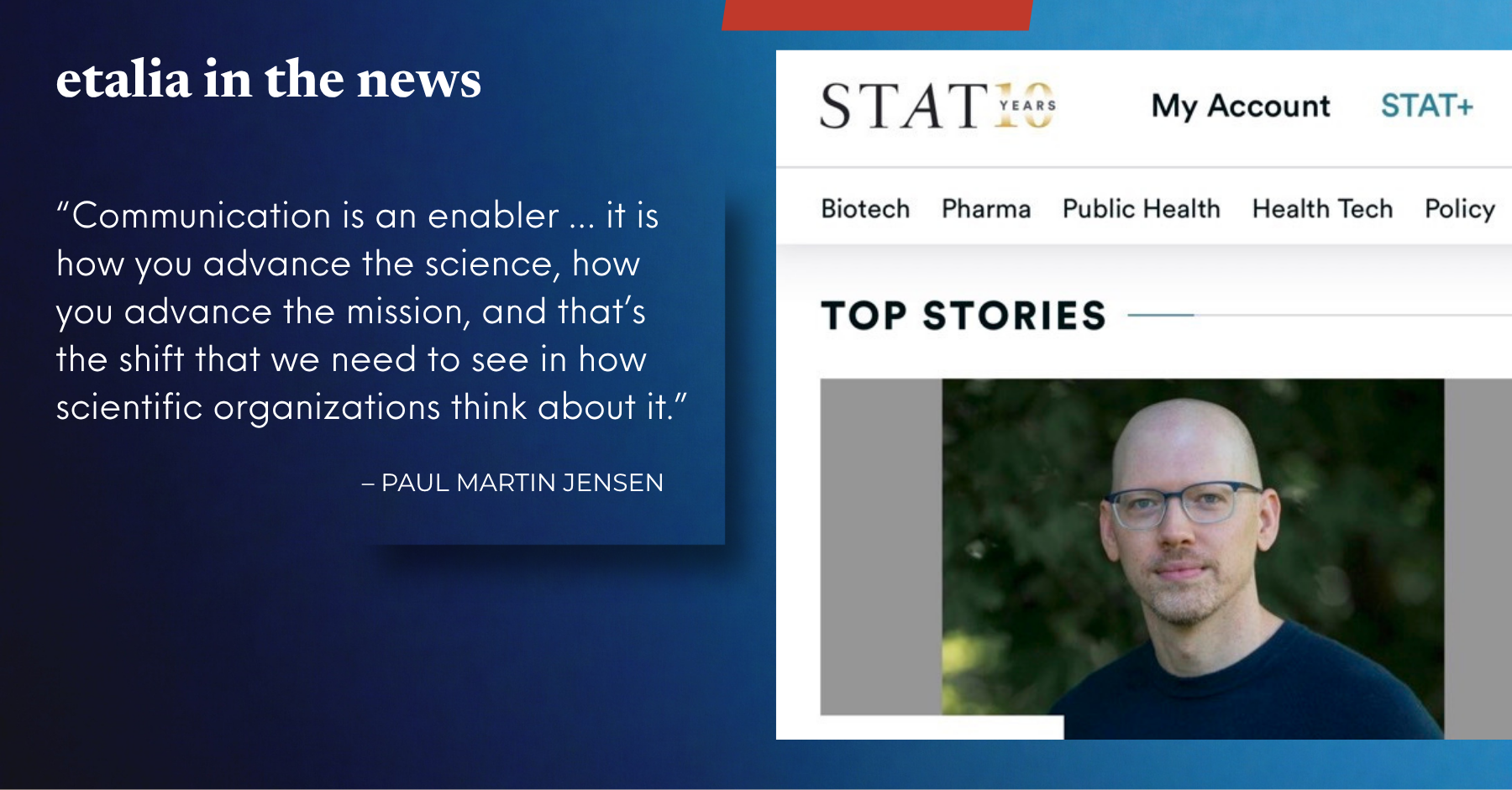
Wall Street Journal · New York Times · Financial Times · STAT · Nature Reviews Cardiology · and 30+ more — for authors from staff scientists to heads of state.
Before your next funder enters the room, they'll search for you. Op-eds are what they should find.
WHO WE WORK WITH
We work with leadership teams that feel a deep purpose in their work and are striving to accomplish big things. We're not the right fit for organizations that are so established they've stopped feeling the need to prove themselves. Most come to us at an inflection point: a raise, a diversification mandate, a policy window, a mission bigger than its current budget.
OUR IDEAL CLIENTS ARE AT LEAST SLIGHTLY INTIMIDATED BY THE SIZE OF THEIR VISION.
CLIENT REVIEWS
— Dr. Sharon Phares, former Chief Scientific Officer, National Pharmaceutical Council; head of research at the Center for Biomedical System Design at Tufts Medical Center
ABOUT OUR APPROACH:
“Science Relations provides what has been missing in my 30+ years of leading research organizations: the connective tissue between scientific insights and where the opportunities for communicating these insights are in the marketplace that is timely and relevant.
It is exactly what we need now. ”
“Carolyn helped me quickly transform my confidence and composure under pressure, and without a significant time commitment.
I’m at a pivotal time in my career where workload, opportunities, leadership challenges are all growing. Carolyn developed a program that was perfectly tailored to my needs.
She also helped me capture my unique vision as a short audio track that I listen to whenever I need peak performance, right before a big meeting or high-stakes interview.
This is easily the best investment I’ve made in professional coaching in 15 years of consulting practice.”
— Phil Coticelli, Executive Director, Alzheimer's Policy Working Group
ABOUT OUR WORK PREPARING EXECUTIVES FOR INCREASED PUBLIC VISIBILITY:
“I've written for leaders at Google, Stripe, and a long list of tech giants, and Paul is among the best thought leadership writers I've ever worked with. Carolyn is a powerhouse. She brings a whole other level of support for the intensity that comes with publishing and stepping into public view.
Etalia's strategy is years ahead of what anyone else is doing.
If you want basic blocking and tackling, hire a PR firm. If you want a special-ops team focused on results, look no further."
— Elizabeth Rollins Wellington, National Bestselling Author
ABOUT OUR APPROACH, WRITING, AND LEADERSHIP SUPPORT:
THIS IS WHERE IT STARTS
In a generation, science hasn't faced a more urgent need to build differently.
The funding playbook that carried your field for decades is being rewritten in real time. If you're ready to explore what narrative infrastructure looks like for your organization —